Tuesday, May 15, 2012

Coconut husk - water retention properties

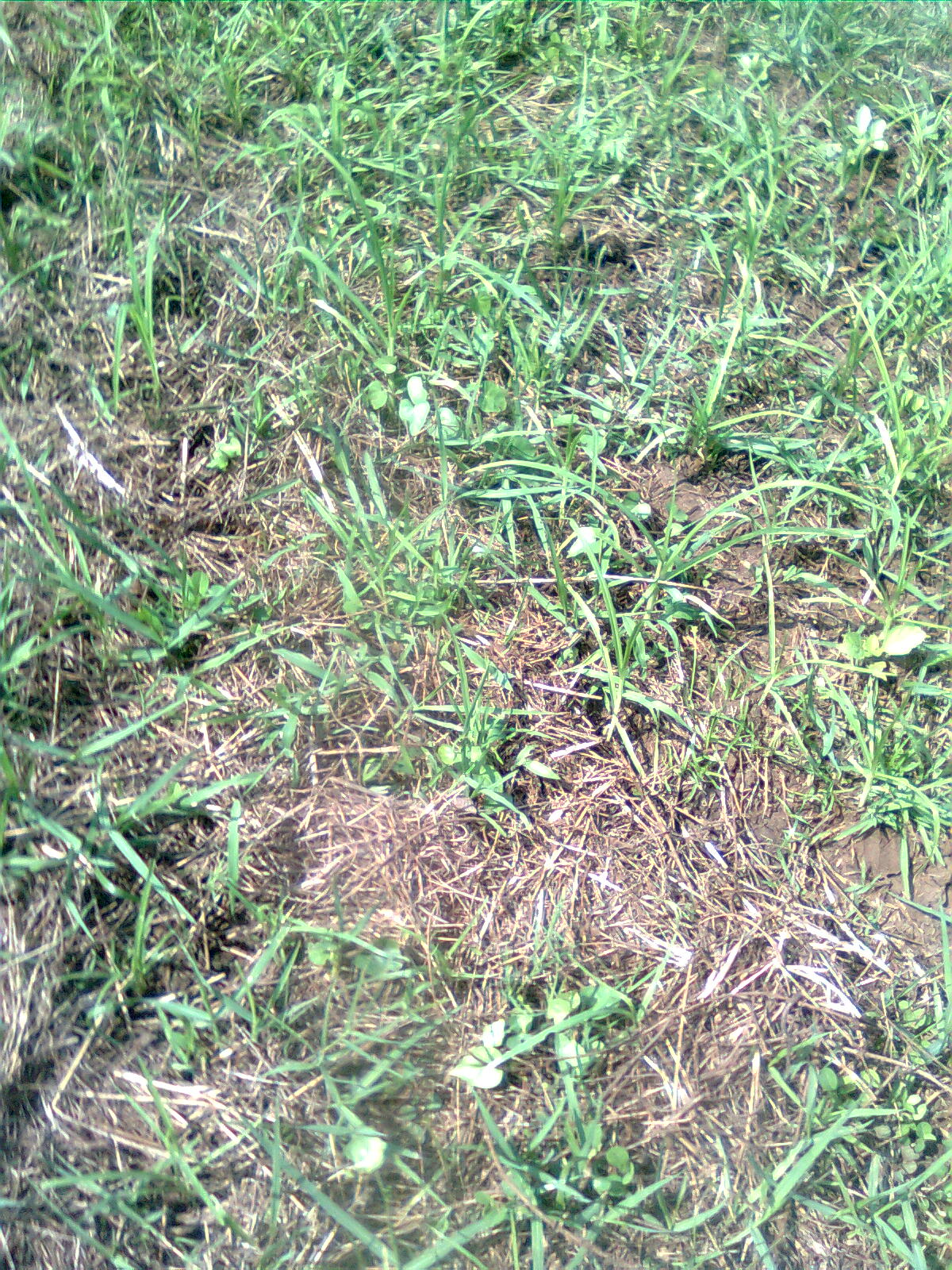
For last 4 years, coconut leaves and husks are the only fertilisers given to my coconut trees and they are doing well. After dehusking is done, coconut husks are piled up and later I move them to the base of the trees. While moving the coconut husks in March (summer time), at the bottom of the pile some coconut husks were still wet. I was little surprised since during peak summer, the land is quite dry and except during watering time, moisture is hard to find. The coconut husks were piled during the rainy season, so wetness should be rain water retained all these time, or the husk was raw and it was still retaining the moisture. So spreading coconut husks is an effective way to increase water retention properties of soil.

Recently I was reading a book about the 'Karshakasree' winners and two of them had used waste of coconut husk very effectively. One was C.J.Skaria Pillai from Palakkad and he had bought some land in Nallepilly and found that land was quite dry and wind was very strong. He was looking for a solution to increase the water retention properties of the soil and tried the waste of coconut husk which comes after making coir. He spread it and used that place for vegetable cultivation and he got amazing results and then he bought this waste in large quantities and incorporated into soil after ploughing and also put some cow dung and land recovered well.

Another person is K.V.Gopi from Pathiriyad,Kannur. He had bought a land with rocky terrain since that was the cheapest and he could afford only that much. Luckily nearby there was a coir factory and its waste had piled up and he completely made use of it by bringing it and spreading it on the land. The land recovered remarkably well. At one point he had cultivated 'cheera' in this 3 acres of land and had 100Kgs of 'cheera' to sell every day.


Sunday, April 29, 2012

Termites

Termites do a wonderful job in converting organic matter. During the summer they are active and within days dried leaves, husks, whole coconuts etc are eaten up. Without them decomposing organic matter will take long time. Some times they are seen eating some portion of the barks on the coconut trees, but so far hasn't damaged any trees. Here are some pictures from the farm...


Saturday, April 7, 2012

When to cut weeds?

There is a saying..crops are sown by man while weeds are sown by god. If your crop is surrounded by weeds and starts blocking sunlight, the crop growth will be arrested. A matured weed plant produces hundreds of seeds. Once produced these seeds may get carried away by wind, rain water or may germinate in the same place under right conditions. Obviously to reduce the weed seed population, it is best to cut them before seeds set in. This way the weed population can be controlled effectively. Other sources of weed seeds are tilling, wind and rain water. If we avoid tilling, and mulch heavily, then seeds which typically comes with wind will remain mostly on surface and won't germinate. Also the rain water from other areas should not be allowed to flow to your field which will have many weed seeds.

Also it is better to time the weed cutting and mulching well advance before the rain recedes so that moisture can be retained. For e.g in Kerala, experts advice to mulch before the north-east monsoon so that the rain water from this monsoon can be well preserved.


Monday, March 26, 2012

Raggi cultivation - some experiments

I tried Raggi in one small portion of the paddy field in December 2011. I had bought the seeds from Sahaja Samridha, Bangalore.

Palani (my farm worker) and myself prepared the field for the nursery using the spade, the field was having enough moisture content, and put the seeds and with spade the land was worked so that seeds gets into the soil.

The transplanting area was cut with Honda brush cutter and a small area was mulched with dried grass, seedlings were transplanted after 3 weeks. It reasonably established well through grass and grains were there, but couldn't harvest since it was completely eaten by peacock, it took around 3 months to mature. But the experiment gave me confidence in raggi cultivation and also it was watered once in 10 days. Even though field is not having water, plant didn't show any water stress. Even though I didn't get any raggi for harvesting, experiment gave me great insights into raggi growing and I will be doing it in more large scale in the next season. Also it looks like cultivating millets are much easier than rice, so my option for crop rotation after rice is clear, as part of this experiment.


Here are some photos..


Sunday, March 25, 2012

Visit to Jayadevan's farm (Alanellur, Mannarkkad, Palakkad)


Organic farming in Kerala is promoted heavily by an organization called 'Jaiva Karshaka Samithy'. Jaiva Karshaka Samithy has district bodys and they have monthly meeting in that district typically in one of the organic farm. As part of the meeting, there will be discussions about the farm and issues faced by farmers. This month's Palakkad Jaiva Karshaka Samithy's meeting was held in Thrikkadiry Jayadevan's farm in Alanellur. Alanellur is 10KMs from Mannarkkad.

Jayadevan is full time into farming and has more than 20 acres of farm where rubber is the main cultivation. He cultivates completely in organic methods since last 6 years. He also has coconut, arecanut, nutmeg and rice field of about 1.8 acres. It looks like he is the only farmer who is still doing rice in that area. Rubber is the main source of income for him and the next higher part is from
70 fully grown up nutmeg trees which gives around 4 lakhs per year. He has 5 cows and a biogas unit and the slurry is pumped to different parts of the farm. He used to bring two loads of chicken manure from Tamilnadu and apply it every where. Some of his coconut trees were lost due to some disease called 'Thanjavoor Vattam' and the reason was finally diagnosed to chicken manure which typically has hormones in it. He has drip irrigation in most part of the farm. He has one area where there is coconut and with cover crop as mucuna which is typically used in rubber plantations. He mulches this area with coconut leaves and make trenches and bury husks in that. This area does not have watering facility but still the trees are looking really healthy and yield is very good. The mucuna was still green in the summer and Tony chettan (legal cell - One earth one life - magazine of Jaiva Karshaka Samithy) was pointing out that they have roots 2-3 feets deep and sucks water and make the area dry. This happens with all the trees which are green in the summer ..one tree called 'Ung' belongs to this category. Mucuna once established is difficult to remove and he is looking for options to remove this. He does not get labour to harvest coconuts and some one was pointing out that the yield may be less in non-harvested fields and the trees where tender coconuts are harvested there is more yield, may be the tree does not spend much of its energy if it is early harvested.

He grows three different varieties of paddy in his 1.8 acres of field so that each mature in different time. He prefers it this way since it is difficult to get labour and hence most of the work is done with couple of women and men laborers. The paddy field has become risen over the years because of the eroded soil comes with water and gets deposited. He cultivates just once in a year and rest of the time, field is left fallow. He grows daincha and once it is grown up, he puddles and leaves it with water for 1 month and then transplants. He gets around 3 tons of paddy, and he uses HYVs Jyothi, Uma and Aiswarya. There was some grass in between the rice and this does not affect him, he does not weed because of labor shortage and some time they press the weeds down with foots. Some body asked what he does with 'Chazhi' (Rice Sapper) which drains the milk at milk stage. He says chazhi does not survive since his is the only rice crop and also because of just one time cultivation of rice. Another opinion was that in fields cultivated with organic methods this pest does not attack.

One Narayanan master (86 years - retired school teacher) was commenting that the rubber plantations are green in the summer and hence they drain water and make the area dry. Some people were of opinion that rubber plantains should be avoided, but Tony chettan had the opinion that rubber plantations are done in monoculture way and people first cut all the trees from rubber plantations before planting. This method is not correct, rather we should start planting trees in between the rubber trees so that mono culture is avoided. Coconut is not giving any money for the farmer and farmers live in the society and they need money, and hence rubber is attractive. Also at some point Tony chettan was saying, glyricedia fixes excess nitrogen and plants grow more and they are affected by disease, so planting more glyricedia is not advised rather 'Uzhunnundi' also should be planted which has broad leaves and better to cut its branches also so that organic carbon content increases in the soil. Cow dung should not be considered as a manure, it has just 2% nitrogen but it has lot of microbes and hence if applied along with mulch, lot of elements becomes available to plants.

Tony chettan also talked about his water conservation in the farm. He walks through his farm when it rains and where ever water flows he makes a pit and allows water to sink in. This way no water is allowed to flow out from the farm.


Wednesday, February 29, 2012

Upland rice cultivation in Kerala - Some information

While I was searching for upland rice information, could get some information scattered in the web, so thought of putting some information together. I haven't started upland rice cultivation yet, but planning to start it in the monsoon season 2012.

There are two types rice cultivation - Upland rice and Wetland rice. Most commonly seen rice cultivation is  Wetland rice where the paddy fields will be flooded with water and there will be always standing water in the field. Newly developed SRI (System of Rice Intensification) method require no standing water, but still the land has to be moist all the time, and field will be muddy all the time. Upland rice cultivation is done on fields where there is no provision to make standing water available. Even after rain, the water will be drained immediately. Upland rice is normally cultivated in the space available in coconut farms and other upland farm area near the houses.

While talking to some elders they told that upland rice was cultivated in Kerala during the start of monsoon, and it was a common practice. They plow the land and apply some cattle manure and then put seeds at the start of monsoon, typically by around May 15th. The seeds germinate and there is enough water from the rain in the month of June,July,August..and harvest is in August end or in September. Since there is no standing water weeds will be there, and some weeding may have to be done. But the seeds used for upland are special types which grows tall (4-4.5ft) and wild and hence weeds is not much of a problem. Also these seeds are drought tolerant so they are not much affected even with less rain, but the yield of these traditional seeds are less.

Some of the traditional varieties used are - Parambuvattan, Karuthamodan, Karanavara, Kalladiaryan etc...The yield of these are - Parambuvattan - 456Kg/Ha, Karuthamodan - 1632Kg/Ha, Karanavra - 2532Kg/Ha, Kalladiaryan - 2160Kg/Ha.

There are HYVs developed for upland rice and some of these are with their yields - Vaisak (3768Kg/Ha), Swarna Prabha (3900Kg/Ha) and Aiswarya ( 3840 kg/ha). But these HYVs are supposed to require higher input for their optimum production, may be more chemical fertilizers while traditional varieties are supposed to be low inputs.

Here is the source of these information
http://paddymission.org/index.php?option=com_content&view=article&id=94&Itemid=98&lang=en
Some videos about upland rice cultivation
http://www.youtube.com/watch?v=rICL5IQWBl4
http://www.youtube.com/watch?v=1eTVXuNyoA0&feature=related
http://www.youtube.com/watch?v=2JCMKdf3Rnc&feature=related


Friday, February 24, 2012

Subash Palekar's zero budget no-till rice farming

This is some information about Zero budget farming after reading Subash Palekar's books and also interacting with farmers. I have also given a brief about zero budget no-till rice farming given in Subash Palekar's "Techniques of Spiritual farming". I don't practice zero budget farming, but follow natural farming as advocated by Masanobu Fukuoka.

Zero budget farming advocated by Subash Palekar from Maharashtra is popular in different states of India. This method basically talks about mulching using agriculture waste generated from farm, mixed cropping with stressing importance of leguminous crops and also applying a set of preparations based on cow dung, urine of traditional Indian cow. This is called as Zero budget since all the required things can be cultivated at farm itself and hence no inputs has to be brought from outside.

The most popular preparation is Jeewamritha which has cow dung, cow urine, pulse powder, jaggery and a handful of soil. Jeewamritha is not talked as a fertiliser rather it contains lot of microbes and hence decomposition of the mulch becomes faster and earth worm activity becomes more and land becomes fertile. People who has used Jeewamritha tells that visible changes in the earth worms can be seen within a week itself. Also one good thing is that 1 local cow is enough for 30 acres of land. The calculation goes like this, Jeewamritha has to be applied once in a month per acre and local cow gives 10Kgs of cowdung per day which is sufficient for an acre in a day. So within a month all 30 acres can be completed once and cycle repeats. I was impressed with this scheme, since 1 cow per 30 acre of land seems to be a sustainable model. After seeing some farms I felt that if the cows increases in the farm, the fertility will reduce since no grass will be left for mulching.

Subash Palekar's has written three books on Zero budget farming..Principles of Zero budget farming, Philosophy of Zero budget farming and Techniques of zero budget farming. The book Techniques of zero budget farming gives a clear description of how all mixed cropping can be done and a description of how various crops are cultivated using Zero budget farming philosophy.

I had visited some zero budget farms - Krishnappa Dasappa Gowda in Mysore, Manoj in Kanjikode, Palakkad, Chandrasekhar, Vithinaserry, Palakkad and Dr. Raju , Karivannur, Thrissur.

Subash Palekar also talks about zero budget no-till paddy farming in his book - Techniques of spiritual farming. This method goes like this..

When the paddy crop is standing and 15 days before harvest, broadcast Bijamritha treated seeds of pulses like beans,cow pea, green gram etc..Some seeds will fall on the paddy but eventually they also will end up in ground. There will be sufficient water for these pulses to germinate.Since paddy is already matured the leaves will allow more sunlight to reach the pulses which will be sufficient for them to germinate and come up.

During harvesting the seedlings of the pulses will be crushed, but they will again standup. The same thing was described in One straw revolution, but the seedlings in that case are rice seedling..typically the pulse seedlings may break if they are crushed by the foots of the harvesters, so not completely convinced if it will work. Now apply Jeewamritha periodically.

Now on the bunds of the fields he asks to plant glyricedia, pegion pea, turmeric, ginger, cow pea etc..and use the waste from all these for mulching the field later. Glyrecedia provides mulching material at each 21 days.

In March, pulses will be matured, harvest and return all the remains to the field. Also mulch with straw immediately after harvesting the pulses. This may be to avoid hardening of soil with sun light and wind...Apply Jeewamritha over this...March, April and May the soil will be covered with straw.. In the first week of May treat the paddy seeds with Beejamritha. Make holes in the mulch at the distance of 9 inches to 1.5 feet and dibble the seeds into this and add some soil over to it using sickle. Pre-monsoon rain starts by may end and apply Jeewamritha and keep applying Jeewamritha once in 15 days. And again before harvesting the paddy sow the pulses and cycle continues.

This method looks to be impressive, now would like to see some one really practicing it.