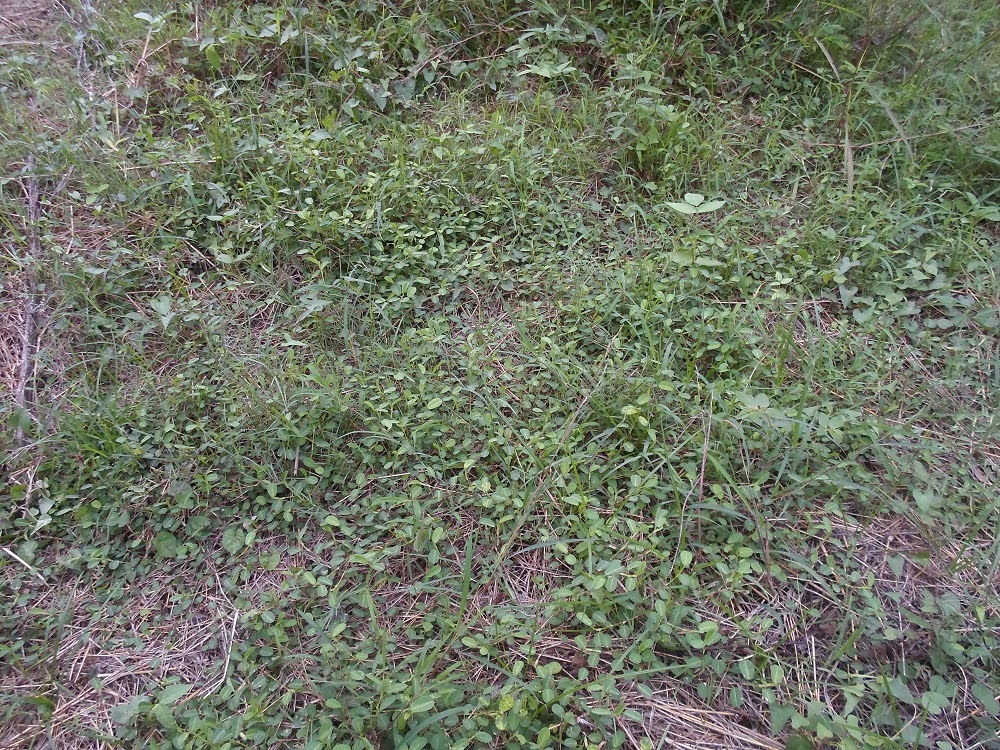
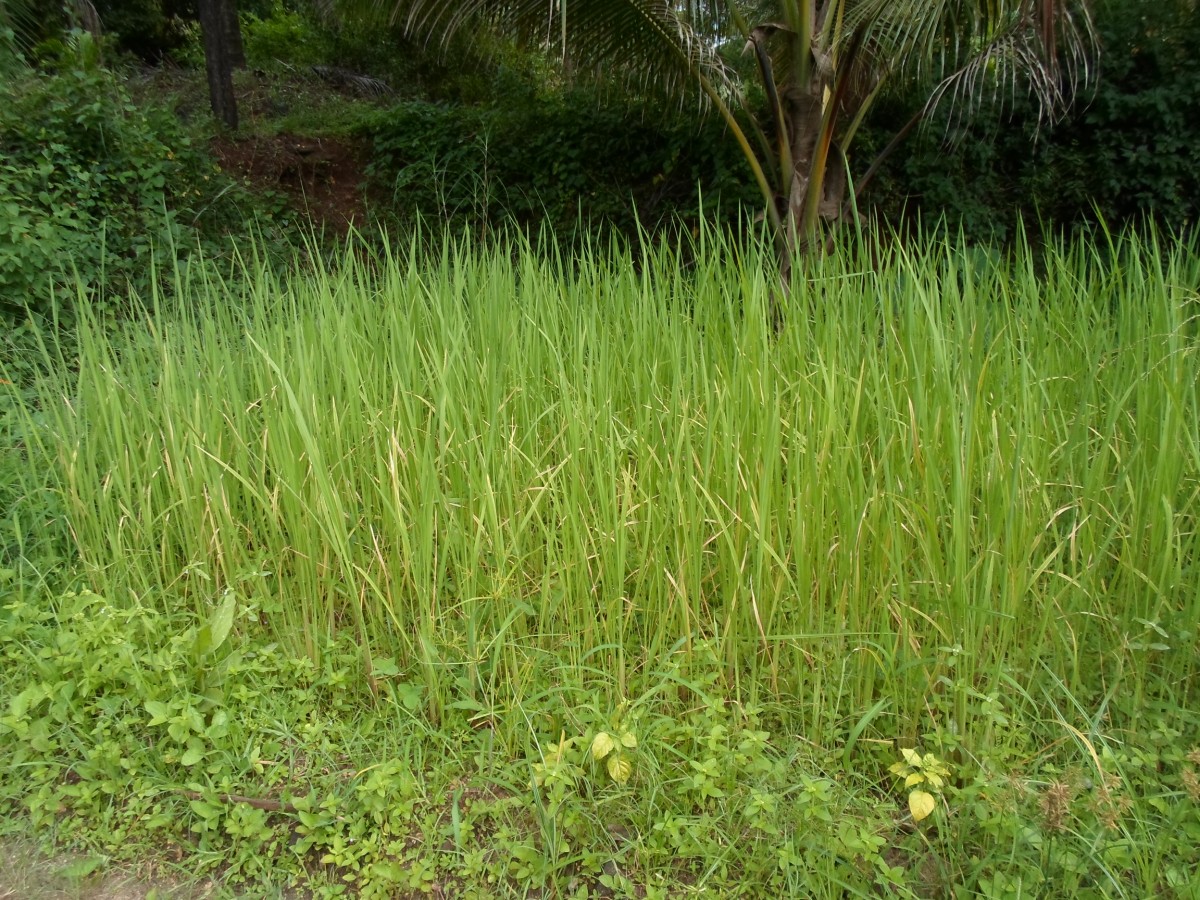
There are lots of Peacocks in the farm. Some time when I walk to some part of the farm, I hear some walking sound, later find that it is peacocks. Some time as I approach some mango tree, they just fly. They are a protected species so their numbers have increased..
Monday, August 26, 2013
Thursday, August 15, 2013
Some thoughts on cover crops for rice
I have been looking for growing a leguminous cover crop which can co-exist with rice like Fukuoka san used clover with rice/barley/wheat. The following are the advantages of cover crop for rice.
1. Established leguminous cover crop prevents weeds
2. Cover crop fixes nitrogen from atmosphere and hence makes rice crop healthy
3. During uncultivated period, the cover crop should establish themselves so that weeds are held
back
After comparison with clover, according to me, these are the features the cover crops should have
1. Cover crop should have a lower height so that it won't compete with rice for sunlight
2. It should be a good nitrogen fixer
3. Its root system should not interfere with rice root system
4. It should grow like a carpet so that weeds can not emerge
Some possible cover crops which I am looking for..
1. Desmodium Scorpiurus
Still don't know the local name of this plant, first I spotted this on road sides. On some visits to my wife's house, I found this legume on road sides, initially I thought this one same as one legume which we call 'kattupayar' which vigorously climbs all over the nearby plants. Even though Desmodium Scorpiurus looks similar, it is not a climber and could see that it establishes well.
The name of this plant was identified by posting it to the following web site http://davesgarden.com/community/forums/t/1316788/#b
I am growing couple of this plants with rice to see how they co-exist.
2. Alyce clover
This plant was found growing in my farm and later it was identified to be Alyce clover. I was surprised to see a type of clover growing on my farm. The plant with small flowers is Alyce clover.
3. Arachis Pintoi
I first spotted this in front of a house on the way to Trichur from Palakkad. Later some body forwarded an article about this, this being used as a cover crop in vietnam in plantations. To my surprise it was available in the local nursery, they call it 'Arachis' or 'Kappalandi (peanut) Chedi (plant)'.
Arachis Pintoi seen in Tony Thomas farm, Irumbakan chola, Palakkad. He had planted cuttings at one feet and it established well.
I am trying all these with rice to see which suits best.
1. Established leguminous cover crop prevents weeds
2. Cover crop fixes nitrogen from atmosphere and hence makes rice crop healthy
3. During uncultivated period, the cover crop should establish themselves so that weeds are held
back
After comparison with clover, according to me, these are the features the cover crops should have
1. Cover crop should have a lower height so that it won't compete with rice for sunlight
2. It should be a good nitrogen fixer
3. Its root system should not interfere with rice root system
4. It should grow like a carpet so that weeds can not emerge
Some possible cover crops which I am looking for..
1. Desmodium Scorpiurus
Still don't know the local name of this plant, first I spotted this on road sides. On some visits to my wife's house, I found this legume on road sides, initially I thought this one same as one legume which we call 'kattupayar' which vigorously climbs all over the nearby plants. Even though Desmodium Scorpiurus looks similar, it is not a climber and could see that it establishes well.
The name of this plant was identified by posting it to the following web site http://davesgarden.com/community/forums/t/1316788/#b
I am growing couple of this plants with rice to see how they co-exist.
2. Alyce clover
This plant was found growing in my farm and later it was identified to be Alyce clover. I was surprised to see a type of clover growing on my farm. The plant with small flowers is Alyce clover.
3. Arachis Pintoi
I first spotted this in front of a house on the way to Trichur from Palakkad. Later some body forwarded an article about this, this being used as a cover crop in vietnam in plantations. To my surprise it was available in the local nursery, they call it 'Arachis' or 'Kappalandi (peanut) Chedi (plant)'.
Arachis Pintoi seen in Tony Thomas farm, Irumbakan chola, Palakkad. He had planted cuttings at one feet and it established well.
I am trying all these with rice to see which suits best.
Sunday, August 4, 2013
Weeding in turmeric - using Nejiri Scraper
Earlier I had reported about a weeding tool called Nejiri Scraper which is useful for natural farming.
http://farming-experiments.blogspot.in/2012/12/small-hand-held-weeder-for-natural.html
Today I used this tool for weeding the turmeric raised bed. It was very useful, earlier I tried to weed using hand and it was difficult and time consuming. Using this tool, I was able to cut the grass very effectively since there is only small space between the plants. Some times I just pull the tool and since it is very sharp, it cuts the weed. Some time I cut the plant, when stones are there in the field, we have to be careful not to hit the stones. Cut weeds may come back and I may have to do weeding again, but for natural farming it is OK. Overall I am happy with the performance of tool.
http://farming-experiments.blogspot.in/2012/12/small-hand-held-weeder-for-natural.html
Today I used this tool for weeding the turmeric raised bed. It was very useful, earlier I tried to weed using hand and it was difficult and time consuming. Using this tool, I was able to cut the grass very effectively since there is only small space between the plants. Some times I just pull the tool and since it is very sharp, it cuts the weed. Some time I cut the plant, when stones are there in the field, we have to be careful not to hit the stones. Cut weeds may come back and I may have to do weeding again, but for natural farming it is OK. Overall I am happy with the performance of tool.
Wednesday, July 17, 2013
Rice farming - June 2013 season
I have been doing rice farming since 2010, but failed miserably,so far, but had a great learning. To summarise, in 2010 it was transplanting into a field full of weeds which completely failed, because of weeds completely took over the fields and plant density was too low. From half an acre, I got just 4Kgs of paddy. In 2011, I did it very minimally on raised bed, it was completely grazed by cows. In 2012, I had tilled the land and put different varieties of upland rice, in two fields weeds completely took over and in another field, in some area it grew, and just got 16 Kgs of paddy. In this case, the failure was because of poor plant density and weeds had taken over. I did weeding, but it had delayed, so grass took over. This year I wanted to continue my experiments but minimally, documenting it in photos allow me to review the issues again and again.
In this season, I just tried on some areas...
1. Kattuyanam transplanting with light tilling
In one area of the farm I had grown sunhemp for a complete year and completely left it without doing anything. In the summer sunhemp/grass had completely dried and it was a good start for rice farming. This area is upland, water does not get stagnated so not ideally suitable for normal rice, not sure how kattuyanam will come up. In a small area, I just removed the mulch using a rake tool and slighly raked the soil and transplanted about 3 weeks old, kattuyanam seedlings. Around 375gms of kattuyanam was put in the nursery for this. Seedlings were not enough for this complete area, and in a small area, just broadcasted the seeds and raked the soil. Chickens sensed this and they were eating the seeds, but since seeds were hidden in the soil, they couldn't get all, so some has come up. Since I removed the mulch and land was completely naked, I just planted a few leguminous plants - one is Desmodium Scorpiurus and other one is Wild black gram.
Seeds were put on the nursery on June 1st, transplanting done on June 22
Aug 2,2013
Field after 2 months..
Some weeds are seen at the ground, but anyway paddy has become tall so weeds won't compete
Aug 25,2013
Rains have stopped and field has gone dry, since there is no mulch at the ground, water retention is bad.
I had moved the mulch to the side to make the planting easier.
Of late, this area was not having enough water and plants were turning yellowish. Also since sunlight was less, it was not flowering, so it was not a good idea to do kattuyanam in this area.
Because of lack of water this didn't give any yield
2. Upland rice Vysakh sown in grass growing area
In one area of the farm which has not been tilled for an year, I just cut the grass and creepers were removed and then sown Vysakh rice seeds densely. Weeds had started coming by this time. Rice seeds has come up, but as usual weeds has taken over. No weeding was done, just left it as it is, since weeding strong grasses like crab grass, bermuda grass etc are difficult to handle. Crab grass has a very strong root system, it is not easy to handle them.
The activities were completed by June 10th
Aug 25,2013
Here since there was mulch, moisture is not a problem
Sept 22, 2013
I will get some harvest from this completely no-tilled rice, but it will be far from a decent yield. But there are many things to improve on this - applying some cowdung or chicken manure, having a cover crop, and proper timing so that putting rice before any weeds come out.
Finally I was little late for harvest and peacocks harvested this completely.
3. Kattuyanam transplanting to tilled area
In around 10 cents, I and helpers tilled the land using spade and then transplanted the kattuyanam seedlings. When there was enough water, spading was easy. Similarly transplanting was also easy when there was water released from from irrigation pond. Transplanting was completed as of July 15th, seedlings were around 3 weeks old. I think it is better done at very early stages, like SRI method, since the seedlings were getting broken while transplanting. Two/or three seedlings were put at one place.
Aug 2, 2013
Since there is heavy rain, there is enough water and because of standing water, there is less weeds.
Aug 25,2013
Sept 22, 2013
There is planty of rain this time, so 6 months kattuyanam is doing well.
November 13,2013
By November 20, it will be 5 months, but still no flowers are seen. Checked with Karikalan and he says it will flower at 5th month and will mature in 1 month. So just waiting...
December 15,2013
strong wind was there and plants completely fallen down..rice in milky stage. Finally when harvested, most of the paddy seeds were void, as some insects had sucked the milk, just got some seeds.
Have very thick mulch in the field
Kuttadan on raised bed
I just put a handfull of Kuttadan rice seeds in a raised bed...just wanted to see how they come up. Seeds were put on July 28,2013.
Monday, July 8, 2013
Cutting grass,creepers using Scythe
Here are some photos of grass, creepers cut using scythe. There are some obvious steps usually a person using scythe follows, since I am using this tool for the first time, figured out after a while.
Step 1: We have to start cutting from a side so that the grass fallen does not interfere with your further cutting. For e.g, if we are facing a field like this, it is better to start cutting from left hand side, since grass cut falls to left hand side and does not interfere with further cutting. Initially I was cutting here and there and cut grass was interfering a lot
Step 2: Cutting using scythe is always, cut and step forward and cut. For e.g I started from left hand side of the field given below, after each cutting, step forward and reach other end of the field and start the next cutting again from adjacent place from where I had started.
The grass cut and grass still to be cut. Broadcasted sunhemp seeds into grass before cutting.
There was too much grass, so had to keep it aside using a rake tool, so that the grass does not interfere with germination of sunhemp
Step 1: We have to start cutting from a side so that the grass fallen does not interfere with your further cutting. For e.g, if we are facing a field like this, it is better to start cutting from left hand side, since grass cut falls to left hand side and does not interfere with further cutting. Initially I was cutting here and there and cut grass was interfering a lot
Step 2: Cutting using scythe is always, cut and step forward and cut. For e.g I started from left hand side of the field given below, after each cutting, step forward and reach other end of the field and start the next cutting again from adjacent place from where I had started.
The grass cut and grass still to be cut. Broadcasted sunhemp seeds into grass before cutting.
There was too much grass, so had to keep it aside using a rake tool, so that the grass does not interfere with germination of sunhemp
Subscribe to:
Posts (Atom)


.jpg)