Monday, October 9, 2017

Farm at the end of rainy season - 2017

This year rain was slightly better than the last year..Here are the different crops as of now..


Some heads of 'Koorkka' (don't know the english name), planted using cuttings


Banana variety called 'Attu nethran', since it is near to the house, gets some frequent doses of cowdung


This coconut tree was lost in the summer, it was one of the best yielding tree


Colacasia 


Another variety of banana called 'Poovan'


Pappaya grows good


Tree badly effected in summer, not recovered yet


Banana - sunhemp is put around these and they are slowly growing 


Sunhemp magic, they grow through the grass


Fig and pepper on it, pruned it once, but its natural growth affected and tree has more diseases now


A banana circle, scattered fresh cowdung around, and they are responding well


Pigeon pea and coconut plant, scattered sunhemp seeds around 


Pureria cover crop, if not controlled they are a threat to young plants... 


Pepper


Subabul taking over some areas


Friday, September 22, 2017

Getting some traditional rice varieties from ICAR-NBPGR-Thrissur

Received a call from ICAR-NBPGR (Indian Council Of Agriculture Research - National Bureau of Plant Genetic Research) regional station Trichur a week back if I am interested to attend a paddy field visit/seminar. Today attended the meeting with a few farmers and scientists from Tamilnadu Agriculture University. The place is on the way to Chirakkalkode from Mannuthy and bus stop name is 'Pineapple Stop'

I had seen details of this institute some time back while searching for details of some vigorous growing upland rice varieties. 

Please see the document which describe the traditional varieties they preserving


and yet another presentation about Kerala traditional varieties by Dr. Rose Mary, KAU, Trichur who had developed upland rice Vysakh teaming with Dr. Giji


It was a quite a good list and never thought such an institution existed, but could get their numbers and talked to Dr. Joseph John and he promised to help with some varieties, I didn't take up that seriously and after that came with this opportunity to attend the field visit and seminar.

This institute started collecting traditional varieties of rice and other vegetables since 1976, if it had started seriously then we would have much more varieties. Right now they cultivate and preserve around 265 Kerala varieties but they have totally samples of around 3000 rice varieties.

While collecting the varieties, they got least varieties from Trivandrum and Pathanamthitta and according to Mr. Abdul Nizar, it is because since these districts had more literacy and they went behind the high yielding varieties, ditching the traditional varieties. While farmers and tribals from Wayanad and Palakkad preserved much more varieties.

They cultivate in a single area with all varieties located close by, and this time it was mostly upland varieties from different parts of India. According to Dr. Joseph John, upland varieties should be put with the first rain and the timings plays a very important role. They put all the varieties by 25th of May and most of them are ready for harvest.

These people are quite enthusiastic about preserving the traditional seeds and quite helpful in answering all questions. I selected three varieties and they will be sending those seed samples which we have to multiply and use it.

Some abbreviations and meaning of them - Katta - dwarf - non-lodging, Kodi - tall, Mullan - awned

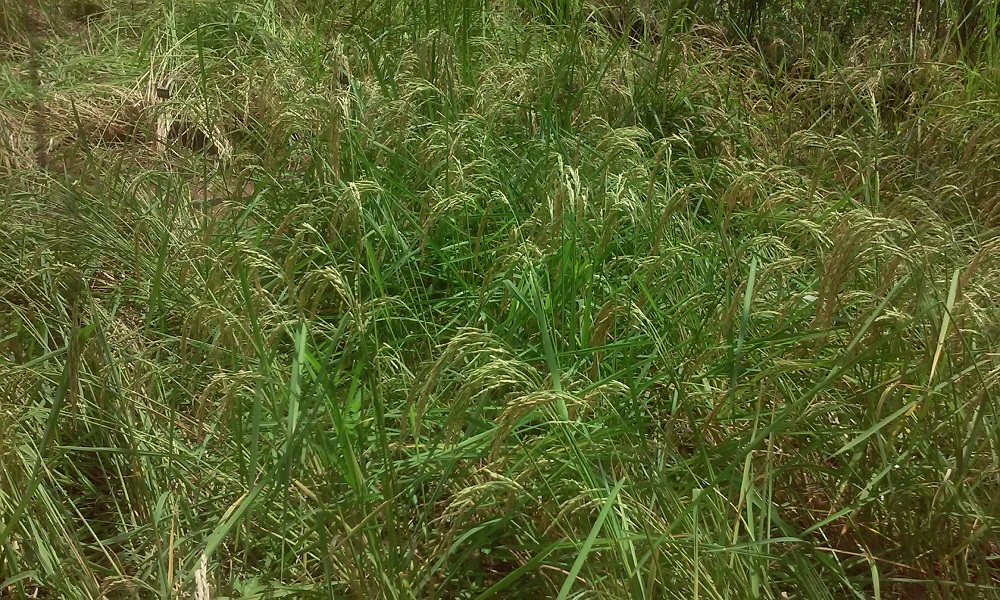
Some photos...


Thursday, August 17, 2017

Taro Cultivation

I have been doing Taro cultivation for the last 2 years, I like the taste of this root crop. I got this variety from my native place, since I knew that local variety is very tasty. We used to cultivate it in my childhood at the starting of monsoon and I really loved those activities and the taste of this crop. Even though it was not cultivated at my parents place, I could get some seeds from my relative who cultivates this every year. 

First year the yield was not that good, 2nd year I applied cowdung and it improved. Another thing I noticed is that we have to put this at the beginning of the first monsoon shower, so that they germinate and grow early. I used to delay the planting operation and realized that once it is delayed, its natural growth will be affected. 

At home, I put 4 small seeds after putting lot of mulch and dried cowdung and this was done in summer, just before the rainy season. They germinated with first shower and started growing well. I put more mulch and also some fresh cowdung. At farm, I put them it 3 different places and all was started late and they are not looking that healthy and big as of now. Also in the farm, they are growing in places where there is shade.


26-Aug-2017


This is under shadow and also was put after the rain had started well.


This is under heavy shade, also started late..


This has enough sunlight, but started late.All are given adequate cowdung and mulch.


26-November-2017
Harvested one of the taro shown in the first picture,good very good yield. I had applied cowdung slurry to it 5-6 times..can be used to make curry for 2-3 days.