Tuesday, November 26, 2019

Greater yam on trees

At the start of rainy season, I had planted a few greater yam at the base of a few trees, Subabul,Glyrecedia and teak wood. They were climbing all over and established well. This time should be having more seeds, should put in more places.


The seeds which grow on the top also can be used for planting or eating.

17-December-2019


Sunday, November 10, 2019

Farm at the end of rainy season

Here are some photos at the end of the rainy season..still we are receiving some rains..today also it is raining heavily


Vietnamese early jack fruit tree..a chicken visitor from neighboring farm, they stopped all buffalo,goat farming operations...only a few chickens left


Papaya trees and yellow bamboo in front of the house


Bamboo planted at the start of the rain, growing well..


Little guard...provide them support for growing and sunlight, they grow well


Sweet potato cuttings planted...


Bird's eye chillies


Tapioca...soil under the Pureria had improved a lot...so this grows well


Mango area....


greater yam

Sunday, November 3, 2019

A set of hand tools which looks useful

Hand tools always fascinated me. In Fukuoka San's video, saw the Japanese sickle he was using and search for a similar tool directed me towards Scythe and has been using it for 6-7 years now.


Scythe takes care of the tall weeds, while small weeds are has to be handled differently. Found push-pull hoe or stirrup hoe to be useful for this and bought one.


Push-Pull hoe can not be used for more tougher weeds and earth works. Because some time, you want to cut weeds and then loosen soil and make place for planting some saplings, in this case spade is useful. Conventional spades available in India are too heavy and mostly has short handles which strains the back. Hence looking for garden hoes, found some interesting designs, see the photos below. Still don't have this, but in the process of making.


Another interesting tool recommended by Sepp Holzer is Folkin hoe, this can be used as a short scythe and also for removing tough weeds and some soil working also. This is not locally available hence has to make one.


Saw this tool which looks almost similar to Folkin hoe, but there are some differences..


Details can be seen in the web site - http://holdredgeenterprises.com/

Tuesday, October 29, 2019

No-till experiment - 2nd season

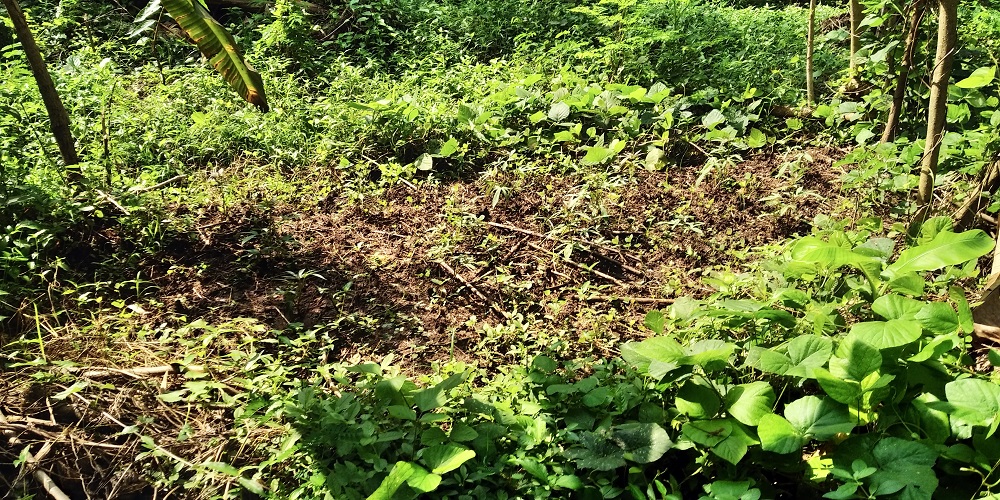
First crop in no-till didn't succeed, it was taken over by weeds. Hence planning to grow pureria for 6-7 months to control weeds. This enriches soil also, and rice cultivation should be possible. After cutting weeds, some pureria plants were transplanted.It would take 3 days effort to cut this field.

02-November-2019

This 0.1 acre field is cut using Scythe, took around 9 hours spread across 3 days. This grass is very tough and at some point it is like a mat, you have to cut in which direction the grass is slanting and also with reduced width. One scythe cut should finish that instant and you should move on, otherwise it never gets completed.


Transplanted Pureria plants which was raised in a flower pot.

Saturday, October 19, 2019

Re-evaluating Pueria Javanica as a cover crop

I have been using Pureria Javanica as a cover crop since 5-6 years now. In some area, it is well established and it is a vigorous climber and climbs all over the small plants and does not allow any other species. But one good thing is that it generates lots of biomass and the mulch looks to be very useful and the soil becomes soft and dark under this cover crop. Recently I planted turmeric, chilli, tapioca, taro and sweet potato after cutting and clearing Pureria established places.

One good thing is that, the soil becomes fertile under this cover crop and if we cut and clean it the land is quite weed free, only this cover crop will come back, so if we periodically cut it then any crop can be cultivated using this as cover crop. I am also planning to try no-till rice using this cover crop.

Never grow Subabul without proper maintenance

Subabul is a leguminous tree but an invasive one in Palakkad,Kerala climate. You can see 100s of small Subabul trees under a grown up tree, that is why it is called an invasive species. Also after growing cutting and removing them is practically impossible, if you want to plant some thing in that area. Also the biomass generation by this tree is not much, since the leaves are very small. Goats and Cows like the leaves, so can be fed to them. So in my opinion, if you plant them and leave it unattended it can cause lots of trouble, if you periodically cut them before seeding, then it is fine. But leguminous trees like Glyrecedia, Pongamia etc are OK, even if you leave them for an year.